
Asking questions leads to new adventures.
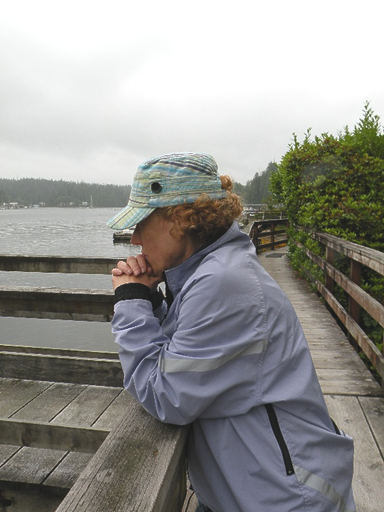
Dear Readers ...
Of all my traits, curiousity ranks number one. Maybe your own curiousity has led you here to answer questions about my history? Perhaps about my hobbies and even my hopes?
A caveat: answers can change.
A few answers don’t. About my parents, for example. My father escaped to Canada from Czechoslovakia on the cusp of the Nazi invasion in 1939. My Canadian mother fled Europe just steps ahead of enemy rifles. Working for the government in war-time Ottawa, they met at the propitiously named Camp Fortune, the ski club my father started for civil servants. Post-war, the married couple crossed the Atlantic again to live in London, England where my father worked for the newly created Trans Canada Airlines. A transfer to Paris, France meant that their pre-schooler, me, chattered away in English and French before moving back to Montreal, Canada.
Which brings us to less definite answers.
Asked where I come from, I would say, I’m not sure. I’ve moved from Montreal to Toronto to Hamilton to St. John’s, Newfoundland to Ann Arbor, Michigan, to London, Ontario. The world calls me to keep looking for home. I still have the continents of Australia and Antarctica to explore, the first suited to my trusty bicycle, the second to my hiking boots.
Along the way how have I learned? Like a patchwork quilt I am made from pieces of school and book learning, from scraps of travel, but mostly from the finely woven backing of my quilt, the interconnected threads of husband, children, grandchildren and friends. As in life, connection never ends.
And hopes? Especially the hopes for my writing. First, I intend to keep looking to see what it is that I haven’t seen. And second, I wish to support my readers’ yearning for the joy and mystery of unanswered questions.
Heather's Short Story
Throughout my life as journalist, teacher, editor, radio scriptwriter, and social worker I’ve asked questions. Even as a student waitress at Jasper Park Lodge in Alberta’s Rocky Mountains I asked questions, less imaginative but important to my earnings.
Why not, then, use questions to capture my short story? To interview myself? I am after all, a Gemini, the Zodiac sign of twins.
When did you start to write?
At age six I finished my first story. Not for school, just for myself, just because I wanted to write a story. That urge hasn’t changed these decades later.
Do you decide to write and then look for a subject to write about?
It’s always the other way around. Be it the extraordinary human resilience I witnessed in Haiti, or the genius of a self-educated Newfoundland fisherman, or the influence of Basque whalers on eastern Canada—something in me says: write about this.
How do you choose the form and genre for what you are writing?
I don’t choose. Whatever inspires me dictates whether it will be a poem, a short story, a collection of essays, or a novel. The magic realism short story, “The Boy, the Balloon, and Open Blue” developed from the social work I was doing with people fleeing war-torn countries. At the London, Ontario Balloon Fest I joined several refugee families to watch the huge ballons rise. A young boy pointed at the people riding in one balloon’s wicker basket and asked, “Will they see my deda?” “His grandfather,” the child’s mother translated.
Are there other literary genres beside magic realism which attract you?
Very much so. In Blues for Joy, my book of essays about marginalized Haitian people the journalist in me focussed on observation. Researching Haiti’s history provided context for what I experienced.
While I lived in Newfoundland, folk history captured my imagination. Because I needed the rights to dramatize a book about the hardships of the inland fishery, the publisher offered a trade. In return for creating the CBC national radio play, S’posin I Dies in De Dory I would assemble and edit Victor Butler’s cardboard boxes of memories. After the radio play had been broadcast and serialized, the folk history, Buffet Before Nightfall was released.
In my upcoming novel, The Lost Tumbler of Trois Pistoles, myth joins with magic realism and history to focus on the French Basques involvement in the North Atlantic right whale hunt. The mystery of the Basques’ origin, their singular ability to withstand integration along with their unique language led to the combination of the two genres.
Apart from writing and reading what feeds your enthusiasm for life?
From the ancient geology and ice of Greenland to the Orca whale pods off Vancouver Island, everything in the natural world connects me to mysterious energy. To engage with nature I hike, ski, cycle, garden, and walk dogs as a volunteer for the Humane Society.
What project are you working on now? Same or different from The Lost Tumbler of Trois Pistoles?
The mystery novel I’m writing now follows generations of several families who continue a feud that began with their ancestor settlers. A different genre, a different setting, a different tone but it shares the view that local legends contribute to making people who they are.